Research and development of sixth-generation mobile networks relevant to vehicles or transport.

Samsung and Verizon complete AI-powered 5G ISAC trial
Samsung and Verizon completed an AI-powered integrated sensing and communications trial over commercial 5G infrastructure in Dallas. The vRAN-based system generated crowd-density heatmaps from radio signals without dedicated cameras, lidar or sensing hardware, demonstrating a potential foundation for 6G capabilities.

Verizon expands 6G forum to develop AI and connected-device use cases
Verizon has added nine technology companies to its 6G Innovation Forum, which will test applications, spectrum and bandwidth needs for AI workloads, smart glasses and integrated sensing and communications.

5GAA reports progress on global C-V2X connected-mobility deployment
5GAA’s 2025 annual report highlights progress in C-V2X policy, standards and deployment, including 5G-V2X demonstrations, emergency calls via non-terrestrial networks and connected-vehicle trials in Europe, Asia and the Americas.

T-Mobile US outlines AI-native 6G and cloud RAN plans
T-Mobile US has announced expanded collaborations with Qualcomm, Ericsson, Nvidia and Deutsche Telekom to advance AI-native 6G research, portable cloud RAN trials and a transatlantic 6G innovation hub focused on sensing, distributed compute and network intelligence.

SNS JU awards €116m to 20 6G research projects
The SNS JU has awarded €116m to 20 projects, has expanded its 6G portfolio to 100 initiatives and has announced planned additional investments of €270m for 2026–27 to advance European 6G research, trials and standardisation.
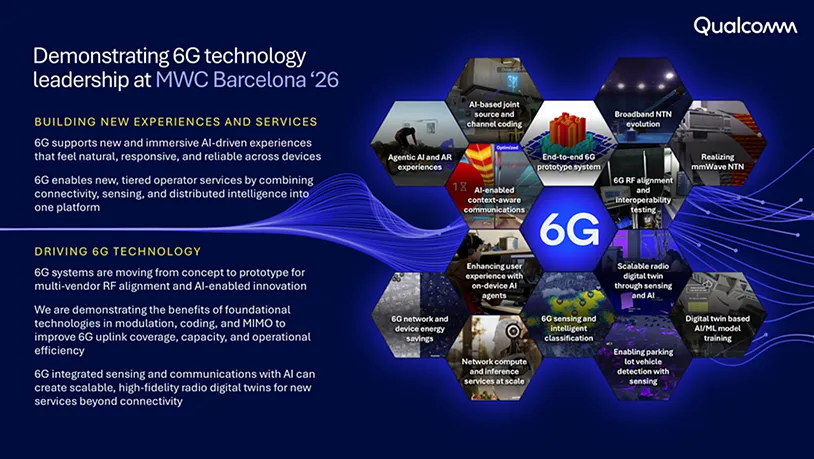
Qualcomm unveils AI-native 6G prototypes at MWC
Qualcomm has presented AI-native 6G prototypes at MWC Barcelona 2026, demonstrating multi-vendor RF alignment, sensing-enabled digital twins, agentic AI services and millimetre-wave non-terrestrial network developments that have advanced early ecosystem validation and prototyping.

Samsung, KT and Keysight validate 7 GHz X-MIMO trial
Samsung, KT and Keysight have validated X-MIMO in the 7 GHz band, demonstrating peak downlink speeds of up to 3 Gbps in outdoor trials using a 256-port base station, ultra-high-density antennas and eight simultaneous data streams.

EU launches €2.5bn NanoIC pilot line at IMEC
The EU has launched a €2.5bn NanoIC pilot line at IMEC to advance chip development beyond two-nanometre nodes, bridge lab-to-fab gaps and support open-access, pan-European collaboration, with funding from EU, national governments and industry partners.

AI-native air interfaces for the physical layer
Researchers have applied deep learning to design physical-layer waveforms, and trials have demonstrated spectrum, energy and latency gains, while interoperability, standardisation, testing and training-cost challenges have been highlighted.

Giga-MIMO and SBFD for 6G upper-midband networks
Research has shown that Giga‑MIMO and subband full duplex (SBFD) have increased uplink capacity, reduced latency and enabled upper‑midband FR3 deployments, supporting higher throughput, sensing and pragmatic co‑location strategies for scalable 6G rollouts.

IIIT-A develops semantic communication for vehicles
IIIT-A develops semantic communication to reduce sensor data bandwidth for autonomous vehicles, with IIIT Gwalior and Jabalpur; funded by a ₹1.46 crore grant and applicable to traffic control and 6G.

FR3 role in 5G-Advanced Release 18
FR3, spanning 7.125–24.25 GHz, is included in Release 18 to extend mid-band capacity; deployment will depend on macro co-location, cell planning and realistic indoor performance expectations.

OBBB Act sets spectrum deadlines for US 6G readiness
The article states the OBBB Act mandates identifying and auctioning mobile spectrum by 2034; it says at least 600 MHz should be ready for full-power 6G deployments by 2029.

NATWORK 6G cybersecurity and resilience framework project
NATWORK develops an AI-driven, energy-efficient 6G cybersecurity and resilience framework; consortium-led pilots, testbeds and standards engagement support evaluation and potential commercial exploitation.

SoftBank trial shows 7GHz viable for urban 6G coverage
SoftBank and Nokia field tests in Tokyo indicate 7GHz spectrum can provide wide-area urban coverage and stable connectivity for 6G macro deployments, with performance comparable to 3.9GHz in open areas.

Europe's 6G Strategy for Ethical and Inclusive Networks
EU-funded 6G4Society coordinates researchers, industry and civil society to prioritise sustainability, ethics and inclusivity in 6G development, informing policy and industry decisions ahead of anticipated 2030 deployment.
Ericsson, Nokia and Fraunhofer HHI Collaborate on 6G Video Codec Standard
Ericsson, Nokia, and Fraunhofer HHI collaborate to develop a next-generation video codec standard for 6G, enhancing compression efficiency and energy scalability for future media applications.

Vodafone Conducts 6GHz Spectrum Live Test with 2.5Gbps Speeds
Vodafone achieved 2.5 Gbps download speeds over 200 MHz in a 6 GHz spectrum test in Germany, highlighting potential for improved network efficiency and reduced capacity costs amid growing demand.

Vietnam Allocates Spectrum for 6G and Wi-Fi 7 Technologies
Vietnam’s new radio frequency plan opens key mid- and low-band spectrum for 5G, 6G, Wi-Fi 7, and satellite services, aligning with global standards to support next-generation technology deployment.

Nokia Licenses Juniper's RIC Technology to Enhance 5G and 6G AI
Nokia has licensed Juniper's RAN Intelligent Controller technology and absorbed its 45-person team to enhance its AI-driven MantaRay platform, supporting multi-vendor 5G and preparing for 6G networks.

Finland Advances 6G Research at University of Oulu
Finland’s 6G Flagship leads academia-industry collaboration in wireless communication, focusing on resilience, distributed intelligence, and real-world testing through the 6G Test Centre in Oulu.

Qualcomm VP Leads Global Telecom Standards Development
Juan Montojo-Bennassar, Qualcomm VP, manages extensive international engagements to advance global telecom standards, balancing technical leadership and strategic industry collaboration.

Verizon Launches 6G Innovation Forum with Industry Partners
Verizon announced its 6G Innovation Forum with key industry collaborators, focusing on use cases, spectrum challenges, and technology development to advance 6G standards and deployment.

Europe Advances Towards 6G-Enabled Digital Infrastructure
Europe is progressing in 6G research to support future digital infrastructure, focusing on sustainability, connectivity, and security to meet demands by the 2030s.

Nokia Opens New Oulu Campus for 5G and 6G Network Development
Nokia has inaugurated a 55,000 sqm campus in Oulu, Finland, dedicated to the design, manufacturing, and testing of 5G and 6G networks, integrating Industry 4.0 technologies and sustainability initiatives.

EU Strategies to Enhance Digital Connectivity and 6G Development
The EU aims to expand 5G coverage, invest in 6G research, and harmonise telecom regulations to strengthen digital infrastructure and support future technologies like AI.

MediaTek Advances Connectivity Towards 6G Integration
MediaTek is developing AI-driven 5G enhancements and non-terrestrial network integration, contributing to the foundation of 6G connectivity expected by 2030.

6G Advancements and Impact on Connected Vehicle Technology
6G technology, expected by 2030, promises enhanced speed, ultra-low latency, AI integration, and global coverage, significantly benefiting connected vehicles and autonomous driving systems.

Hong Kong to Auction 2.5/2.6 GHz Spectrum in October
Hong Kong's OFCA will auction 50 MHz of 2.5/2.6 GHz spectrum on 20 October under unified licences expiring in March 2039, supporting 5G and future 6G services.

Softbank and Nokia Conduct 7GHz 6G Trials in Tokyo
Softbank and Nokia have initiated outdoor trials using the 7GHz band in Tokyo to evaluate 6G capabilities, focusing on mid-band solutions for next-generation mobile networks amid rising data demands.

ISAC's Role in 6G Networks and Associated Technical Challenges
Integrated Sensing and Communications (ISAC) is positioned as a foundational capability for 6G, enabling enhanced sensing and network performance but facing significant technical and regulatory obstacles.

3GPP Release 20 Advances 5G and Initiates 6G Standardisation
3GPP Release 20 refines 5G Advanced technology and initiates foundational studies for 6G standards, focusing on system performance, spectrum use, AI integration, and wireless innovation.

PREDICT-6G Enables Reliable Deterministic Networking Across Technologies
PREDICT-6G integrates ethernet, cellular, and WiFi via a logical overlay to deliver deterministic, time-sensitive network services, enhancing reliability for critical industrial and remote applications.

Advancing Secure Connectivity for Future 6G Networks
Qualcomm invests in developing robust security frameworks for 6G, focusing on enhanced access stratum security, trust frameworks, quantum-safe algorithms, and privacy improvements to counter emerging cyber threats.

MultiX Advances 6G Networks with Integrated Sensing Technology
MultiX develops 6G networks combining multiple sensing technologies to enable real-time environmental awareness and adaptive responses across industries and urban settings.
e& UAE Publishes Roadmap for Future 6G Networks
Emirati telco e& UAE released a whitepaper detailing its 6G vision, focusing on AI-native architecture, quantum-secure networks, integrated sensing, and sustainable digital infrastructure.

University of Bristol Advances Semiconductor Device for 6G Networks
Researchers at the University of Bristol have developed an enhanced Gallium Nitride semiconductor enabling high-frequency performance critical for 6G infrastructure and future technology applications.

Europe's Strategic Roadmap to 6G Connectivity by 2030
The EU is investing in research and collaboration to develop 6G technology, aiming for commercial deployment by 2030 with applications across key sectors and global standardisation.

GMV and Openvia Mobility Discuss Future Road Technologies
Openvia Mobility's webinar featured GMV discussing technological innovations in road infrastructure, focusing on advancements in connectivity and sustainability for the mobility sector.
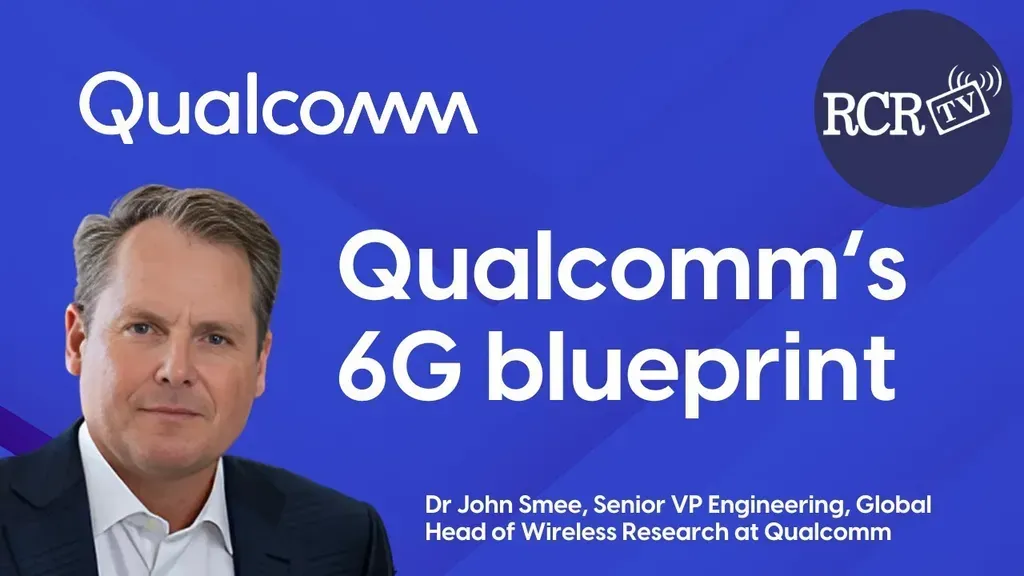
Qualcomm Unveils 6G Development Strategies at MWC
Qualcomm outlines its dual-track approach for 6G, focusing on spectrum efficiency and integrating AI to enhance network capabilities and operations.

NVIDIA Announces AI-Driven Partnerships for 6G Development
NVIDIA has established partnerships for advancing AI-native 6G technology with firms including T-Mobile and MITRE, focusing on enhancing wireless network performance and efficiency.

Keysight Launches 6G Research Lab in Malaga, Spain
Keysight Technologies inaugurates a 6G facility in Spain to advance research, collaboration, and innovative solutions for the telecommunications industry.

ETRI Achieves Milestone in 6G Wireless Communication
ETRI demonstrates a 200 Gbps wireless link, supporting future 6G services, and marks a significant advancement in mobile communication technology.

Enhanced Positioning in 5G-A and 6G: New Business Models
Advancements in 5G-A and 6G positioning may enable telecom operators to develop innovative business models by monetising spatial data without compromising user privacy.

China Plans 4.5 Million 5G Base Stations by 2025
China's MIIT announced plans for over 4.5 million new 5G base stations by 2025, alongside initiatives for emerging industries and international telecommunication services.

Spectrum Strategies for Future 6G Wireless Connectivity
The need for increased spectrum availability is critical as demand for wireless data grows, positioning 6G technology for transformative opportunities by 2030.

Hong Kong Completes Auction for 6/7 GHz Spectrum Band
The OFCA has successfully auctioned the 6/7 GHz spectrum, awarding 300 MHz to local carriers to enhance mobile services and support future technology developments.